Solar Panel Maintenance Schedule
When to clean, inspect, and service your rooftop system to prevent output loss and extend plant life.
Maintenance Fundamentals
Why low maintenance does not mean no maintenance
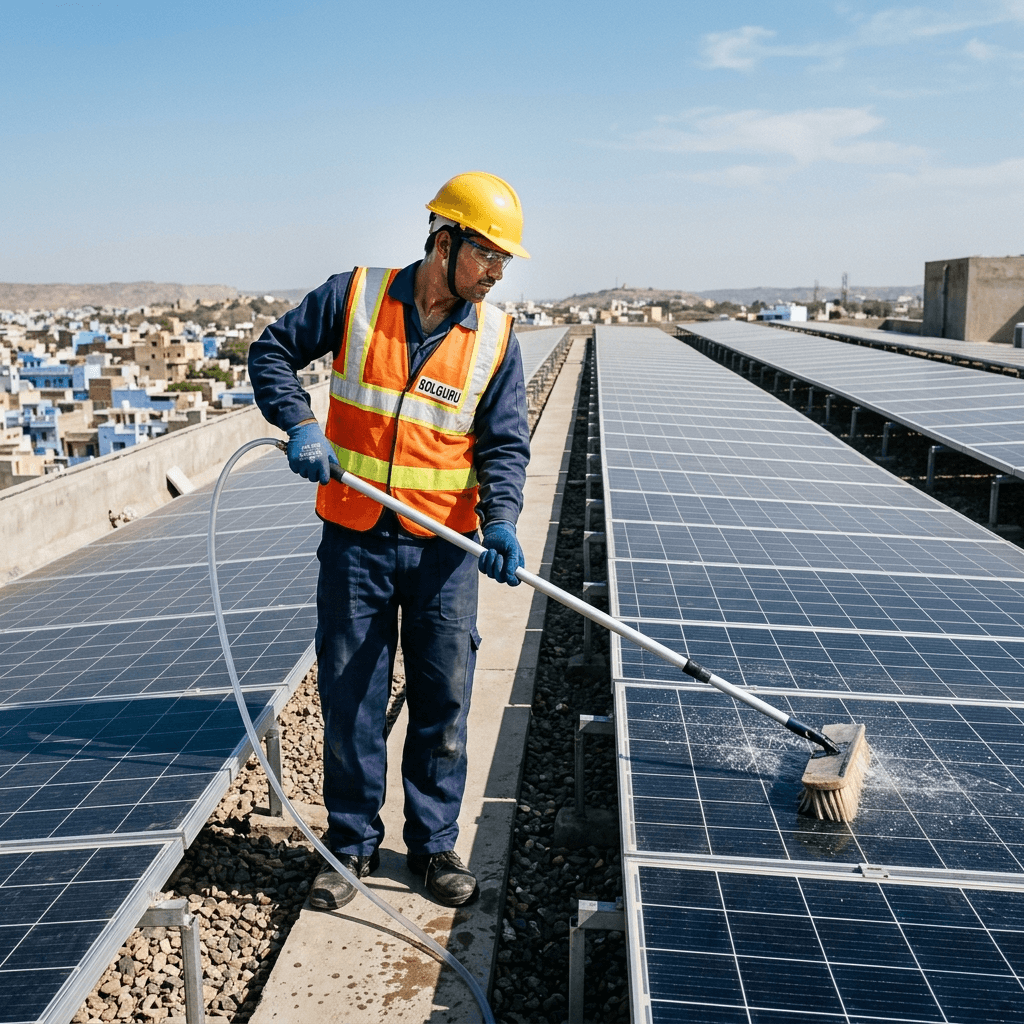
Solar is often sold as "low maintenance," and that is true compared with diesel backup or many mechanical systems. But low maintenance does not mean no maintenance. A rooftop solar owner should have a light but disciplined routine: monitor performance regularly, clean only when needed, and call a technician before a small issue turns into lost generation.
The DGT training manual gives a strong base for safe cleaning and inspection. It says not to sit, stand, or walk on panels; to use clean water; to prefer de-ionized water; to avoid water with mineral content above 200 ppm; to use only mild non-caustic, non-abrasive cleaners; and never to use a metal brush. That is good field advice because many panel problems are created during cleaning, not solved by it.
Modern owners should combine that manual approach with data-based monitoring. IEA PVPS reported in September 2025 that soiling causes average global PV energy losses of about 4% to 7%. That means cleaning should not be done only by calendar. It should be tied to visible dirt, local site conditions, and measurable performance loss.
A Practical Schedule for Rooftop Owners
Step-by-step maintenance timeline
Daily or Weekly
Open the inverter or monitoring app. Check that the system is online, generation is being recorded, and there are no fault messages.
Monthly
Compare this month's generation with the same month last year. Adjust your judgment for obvious weather differences, new appliances, and seasonal effects. Also make a visual inspection from the ground or a safe access point for new shade, bird droppings, heavy dust, broken glass, loose conduit, or corrosion.
Quarterly
Review whether the drop in output appears larger than normal. A practical homeowner rule is to investigate if production is down by around 10% or more without a clear seasonal or weather reason. In dusty areas, coastal areas, construction zones, tree-heavy sites, or after bird nesting seasons, check more often.
Seasonal
Before and after monsoon, dust season, or pollen season: Inspect for dirt film, debris accumulation, roof drainage issues, standing water, and loose hardware.
Annually
Schedule a professional preventive maintenance visit. For commercial or high-value systems, do this more formally and document it.
When Should a System Actually Be Cleaned?
Data-driven cleaning triggers
A fixed "every month" schedule is often wasteful. A better trigger is one of these:
- Visible dirt film or droppings on the active glass surface
- A sustained drop in generation not explained by weather
- A site known to have frequent dust, soot, pollen, or salt deposits
- After storms, nearby civil work, or seasonal dry periods
Safety & Self-Checking Limits
You can safely review the app, look for shade, look for dirt, and check whether the inverter is showing normal production. You should not open the inverter, DC boxes, combiner boxes, or connectors unless you are qualified. The DGT manual repeatedly emphasizes DC danger, earthing, lightning protection, and inspection discipline for good reason.
Storage Maintenance
Battery and hybrid system care
For hybrid and off-grid systems, maintenance must also include the battery and related controls. The DGT manual recommends battery log sheets, electrolyte checks for flooded batteries, terminal inspection, corrosion cleaning, and ventilation checks. Even where lithium storage is used instead of lead-acid, the principle stays the same: battery systems need monitoring, temperature awareness, and a service plan.
The best maintenance mindset is simple: watch performance lightly, act early, and clean carefully. Solar problems are cheapest to fix when they first show up as a warning in the app, a dirty string, a new shadow, or a small decline in output.
Need help with solar maintenance?
SOLGURU provides expert maintenance, cleaning, and performance monitoring services for rooftop solar systems across Rajasthan.
Contact SOLGURU