Agrivoltaics
DUAL HARVEST.SOLAR ABOVE. AGRICULTURE BELOW.
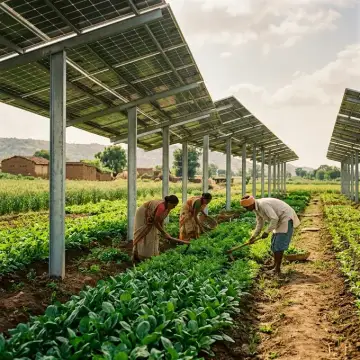
Pioneering agrivoltaic systems that generate solar power while sustaining productive agriculture on the same land. Elevated panel structures create a controlled microclimate for shade-tolerant and high-value crops.
The Concept
Land doesn't have to choose between energy and food.
Traditional ground-mounted solar requires taking farmland out of agricultural use. Agrivoltaics flips this entirely — by elevating solar panels to 3–4 meters on reinforced mounting structures, the land beneath remains fully cultivable while the panels above generate clean electricity.
By deploying N-Type TOPCon Bifacial panels with transparent backsheets, sunlight naturally filters through the array. This creates a controlled microclimate that reduces ground temperature by 3–5°C and protects crops from harsh afternoon sun — crucial in Rajasthan's extreme summer climate.
For farmers, this represents a paradigm shift: earn from the sun twice. Generate steady, 25-year passive income from power sales under PM KUSUM, while simultaneously continuing agricultural production with reduced water usage.
Key Benefits
Synergistic engineering.
Agrivoltaics isn't just about sharing space. The panels and the crops actively benefit each other.
Dual Revenue Stream
Farmers earn from both power generation (₹60,000–₹1,00,000/acre/year) and crop sales — effectively doubling land productivity.
30% Water Savings
Partial shade reduces soil evaporation and crop transpiration. Studies show 20–30% reduction in irrigation requirements in arid zones.
Panel Cooling Effect
Crop transpiration naturally cools the air beneath the array. This lowers panel operating temperatures, increasing solar yield by 2–3%.
Extreme Weather Protection
The overhead canopy protects delicate crops from hail, frost, and extreme UV radiation, leading to more consistent yields.
Crop Compatibility
What grows under solar panels?
Not all crops need full sun. Many high-value crops actually prefer partial shade and thrive under agrivoltaic systems.
| Category | Typical Crops | Shade Tolerance |
|---|---|---|
| Leafy Greens & Vegetables | Spinach, Lettuce, Coriander, Mint, Fenugreek, Radish | High (Excellent growth under panels) |
| Medicinal & Aromatic | Aloe Vera, Ashwagandha, Turmeric, Lemongrass, Stevia | High (Yields often increase due to microclimate) |
| High-Value Horticulture | Tomatoes, Peppers, Strawberries (often grown hydroponically) | Moderate (Requires optimized inter-row panel spacing) |
| Fodder & Pasture | Napier grass, Clover, Alfalfa | Moderate (Reduces feed costs for dairy farmers) |
Technical Specifications
Engineering details.
| Parameter | Agrivoltaic Standard Specification |
|---|---|
| Module Technology | N-Type TOPCon Bifacial with Transparent Backsheet (allows PAR light penetration) |
| Structure Height | 3.0 – 4.5 meters clearance (allows standard tractors and farm machinery) |
| Mounting Structure | Hot-dip galvanized steel, minimum 80-micron coating, 25-year corrosion resistance |
| Row Spacing (Pitch) | Wider than standard (6–8 meters) to allow sufficient sunlight for specific crops |
| Land Required | ~5-6 acres per MW (due to wider row spacing for agricultural access) |
| Subsidy Eligibility | PM KUSUM Component A (up to 60% depending on state implementation) |
Pioneering modern agriculture?
Whether you are a progressive farmer, an agricultural cooperative, or an IPP looking to optimize land use without disrupting local farming ecosystems, SOLGURU can engineer a custom agrivoltaic solution tailored to your target crop and soil type.
Ready to get started?
Get a free site survey and personalized proposal from our engineering team.
Get Free Site Survey