Solar Performance Audit
How to audit generation, spot faults safely, and decide when to escalate to a technician.
Safe User-Level Checks
What owners can safely audit themselves
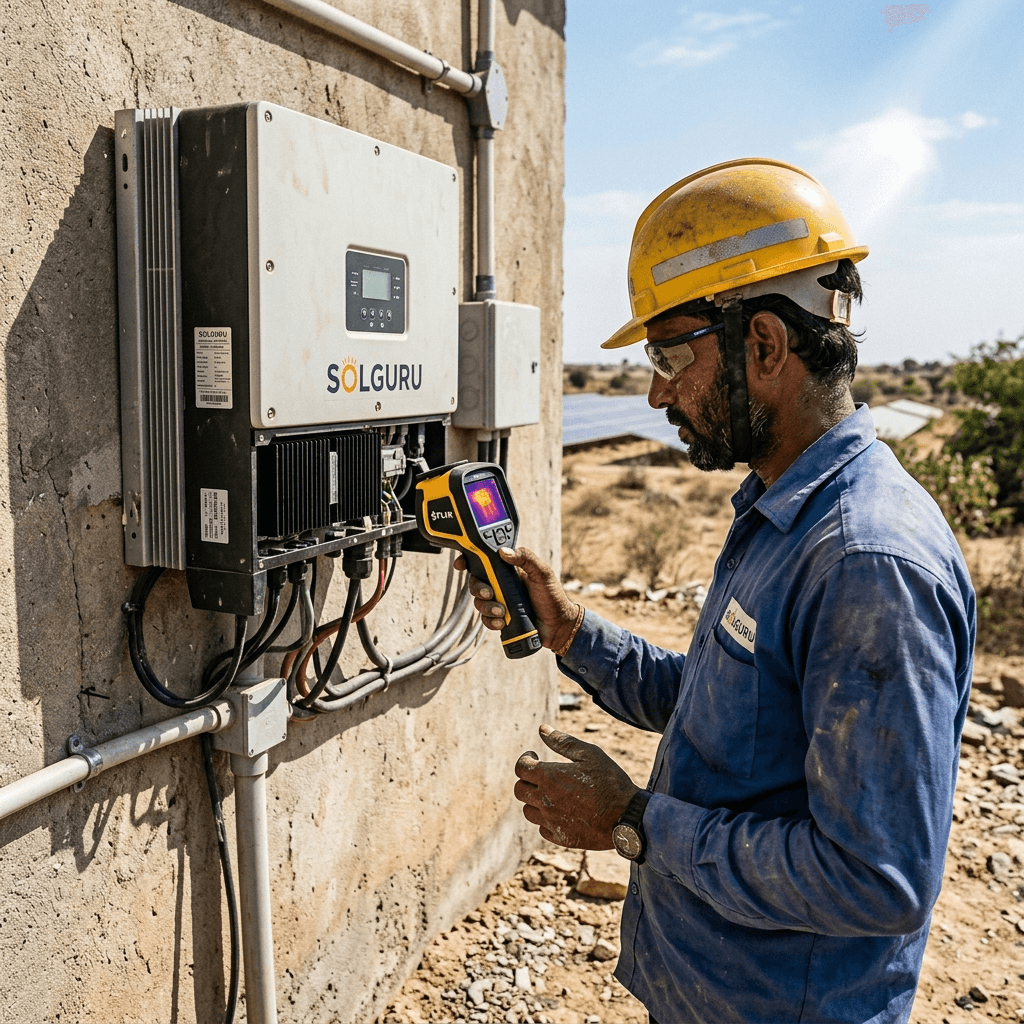
When a solar owner says, "The system is not giving proper output," the cause is often not dramatic. It is usually one of a few repeat issues: dirt, new shading, inverter faults, loose connections, damaged cabling, failed protections, or unrealistic production expectations. A good solar audit starts by separating what the user can check safely from what only a technician should inspect.
The DGT manual treats troubleshooting as structured maintenance, not guesswork. It includes panel cleaning, DC array inspection, mounting inspection, inverter and device verification, earthing checks, and battery maintenance. That is the right mindset for a website guide too: do not jump straight to repair. Audit first.
- Check whether the inverter is on and showing normal operation.
- Open the monitoring portal or inverter app and confirm that data is current.
- Compare today's and this month's output with recent normal periods.
- Compare this month with the same month last year before concluding there is a fault.
- Look for obvious new shade from tree growth, antennae, water tanks, hoardings, or adjacent construction.
- Check for visible dirt, bird droppings, leaves, or standing water near the array.
- Listen for repeated inverter alarms or fan noise changes.
- For hybrid systems, check whether the battery is charging and discharging normally in the app.
Signs That Usually Justify a Service Call
When to bring in a technician
- Production is materially lower for days or weeks without weather explanation
- The inverter repeatedly trips or shows fault codes
- One string or MPPT is consistently weaker than another
- Breakers trip repeatedly
- There is visible corrosion, burnt smell, cracked glass, loose conduit, or animal damage
- The roof shows leakage around mounting points
- Backup time in a hybrid or off-grid system has suddenly dropped
What Users Should NOT Do
Critical electrical safety boundaries
- Do NOT open DC isolators, combiner boxes, inverter covers, or MC4 connections
- Do NOT touch damaged cables or exposed conductors
- Do NOT walk on modules for inspection or cleaning
- Do NOT hose live equipment carelessly
The Technician Audit Flow
Professional inspection checklist
From an audit perspective, vendors should move through a checklist:
- Confirm expected generation versus actual generation.
- Check soiling and shading first.
- Review inverter alarms and event logs.
- Inspect mounting, cable routing, connectors, and protection devices.
- Test earthing, SPDs, and isolators.
- Verify array voltage, current, and MPPT behavior.
- Check thermal hotspots or loose terminations with the right tools.
This is where installation quality and maintenance quality meet. NREL's O&M guidance stresses that better planning and preventive maintenance improve lifetime performance and reduce avoidable losses. In plain terms, a plant that is easy to inspect, properly documented, and maintained before failure will usually outperform a cheaper plant that is only touched after complaints start.
"The most useful customer message is this: monitor regularly, troubleshoot safely, and escalate early. Solar faults rarely become cheaper by waiting."
Need a professional solar audit?
SOLGURU provides expert performance auditing and troubleshooting for rooftop and commercial solar systems.
Contact SOLGURU