On-Grid vs Off-Grid vs Hybrid Solar
Which system architecture is right for your home, commercial facility, or remote site?
System Architecture Overview
Understanding how your solar system connects
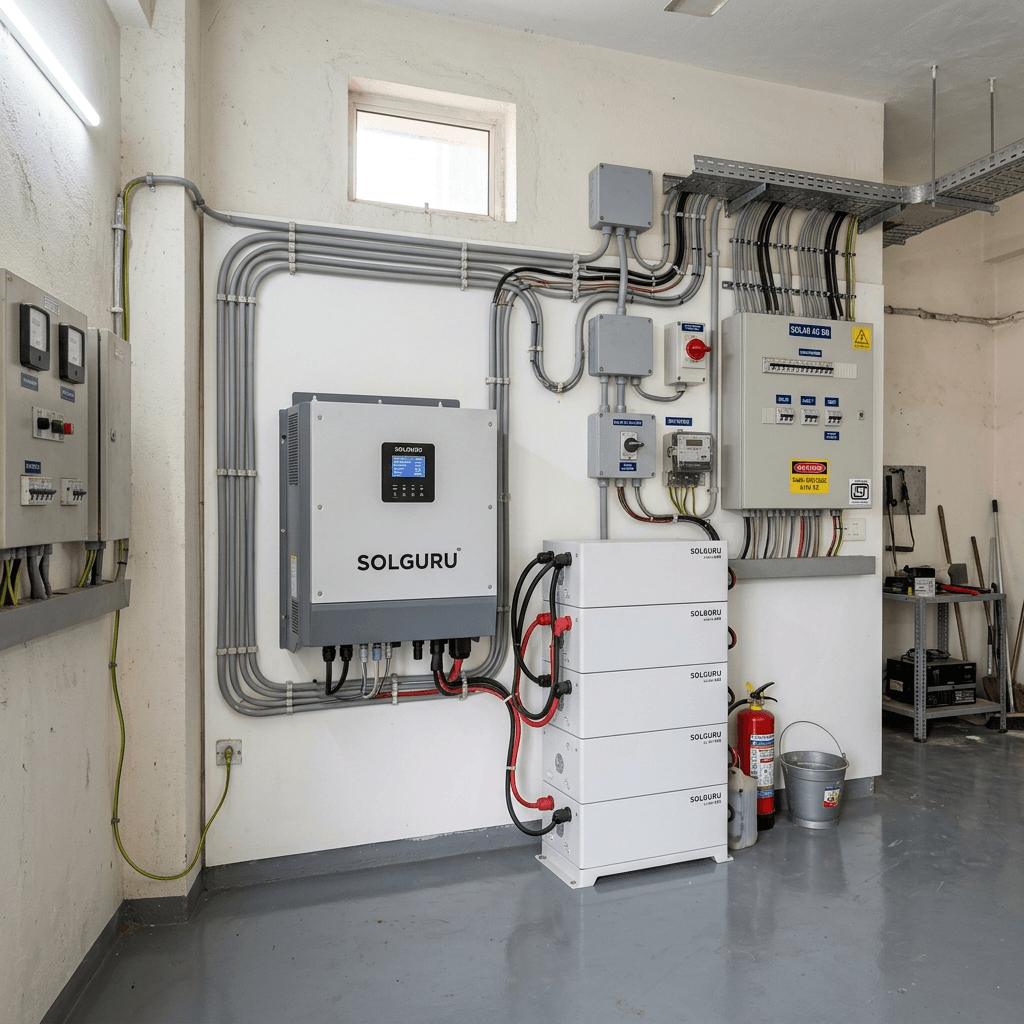
The right solar system is not just about panels. It is also about how the system works with the grid, batteries, and your actual operating needs. The DGT manual teaches this early because the equipment list, wiring, safety design, and maintenance plan all change depending on whether the project is on-grid, off-grid, or hybrid.
On-Grid Systems
The simplest and most common option
An on-grid system is the simplest and most common option. Fraunhofer ISE's 2025 Photovoltaics Report says that about 99.6% of installed PV capacity worldwide is now grid-connected. That tells us something important: if the grid is reliable and the site can export or self-consume solar power economically, on-grid is usually the default answer.
When On-Grid is Best
- The utility supply is reasonably reliable.
- The owner wants lower capital cost.
- Net metering, gross metering, or self-consumption economics are favorable.
- Backup during outages is not the main requirement.
The main drawback is simple: when the grid goes down, a standard on-grid system usually shuts down too for safety reasons. That is normal behavior, not a defect.
Off-Grid Systems
For remote and grid-independent sites
An off-grid system is for locations that cannot depend on the utility or are too remote to connect economically. It needs batteries and charge control equipment, and often a generator backup plan as well. DOE notes that stand-alone systems require more balance-of-system equipment, especially batteries, charge control, safety gear, and metering.
When Off-Grid is Best
- The site is extremely remote.
- Grid extension is expensive or impractical.
- Power independence is more important than lowest upfront cost.
The drawback is higher maintenance and tighter energy discipline. Batteries, depth of discharge, seasonal load planning, and backup arrangements all become operational concerns, not just design concerns.
Hybrid Systems
Comfort plus resilience
A hybrid system combines solar with battery storage and often still keeps the grid connection. For many Indian homes and commercial sites with daytime solar use but unreliable utility supply, hybrid is increasingly the most practical "comfort plus resilience" choice. DOE highlights the main benefits of solar-plus-storage as around-the-clock power value, better monitoring, and greater self-sufficiency.
When Hybrid is Best
- Outages are frequent or expensive.
- The owner wants seamless backup for selected loads.
- Time-of-use savings or self-consumption optimization matters.
- Commercial operations cannot tolerate production interruptions.
The drawback is cost and complexity. A hybrid system requires more careful sizing, programming, battery planning, and future service support.
General Recommendations by Project Type
Which architecture fits which project
- Urban home rooftop: On-grid first, hybrid if outage backup matters.
- Commercial rooftop: On-grid for pure savings, hybrid where downtime is expensive.
- Ground-mounted captive plant: On-grid or hybrid depending on site operations and export rules.
- Farm, telecom, remote pump, or isolated building: Off-grid or hybrid with strong storage planning.
Maintenance also changes by system type:
- On-grid has the lowest maintenance burden.
- Hybrid needs panel and inverter maintenance plus battery health management.
- Off-grid requires the most disciplined O&M because storage is mission-critical.
The best buying advice is to start with the question: "What happens when the sun is low or the grid is down?" If the answer is "nothing critical," on-grid often wins. If the answer is "the house, shop, or process must keep running," hybrid or off-grid becomes the smarter design.
Not sure which system type is right for you?
SOLGURU helps you choose the right architecture based on your site, budget, and power reliability needs.
Consult SOLGURU